In recent times we have heard about many adverse medical events associated with people while they were exercising—considering this, many individuals have criticized physical activity/exercise in totality, which to my dismay, is flawed and not backed by evidence. Physical activity (PA)/exercise is the way ahead for communities to be healthy and fit. Exercise is a cost-effective tool that is best suited in light of recent evidence to act as a preventive measure for the development of future Non communicable diseases.
Although that being said, the American College of Sports Medicine (ACSM) has repeatedly emphasized the importance of Preparticipation health screening. Evidence suggests that regular participation in physical activity has many benefits, including a lower risk of cardiovascular disease (CVD) and CVD mortality. However, the likelihood of experiencing an acute cardiac event (e.g., myocardial infarction or sudden cardiac death) is increased during a bout of physical activity, especially for those who are unaccustomed to vigorous-intensity exercise. Even this being said, we must understand that exercise is safe for most of the individuals and has lots of health-related benefits associated.
So, screening for CVD risk factors and presence of signs and symptoms and/or known cardiovascular (CV), metabolic and/or renal disease must be a common practice to mitigate cardiac-related problems during physical-activity participation.
In the light of these arguments let’s talk about the screening process as proposed by the American College of Sports Medicine (ACSM). Exercise preparticipation health screening has been a part of every edition of ACSM’s Exercise Testing and Prescription Guidelines. However, they have been updated in the tenth edition (2015). The present blog will highlight the screening process according to the updated guidelines.
Let’s dive in and explore the ACSM Exercise Preparticipation Health Screening Protocol.
The purpose of the American College of Sports Medicine’s (ACSM) exercise preparticipation health screening process is to identify individuals who may be at elevated risk for exercise-related sudden cardiac death and/or acute myocardial infarction (ref). So, anyone who wishes to start with physical activity may undergo an exercise preparticipation health screening. This will ensure safe involvement in physical activities and avoid any unforeseen medical events.
The new ACSM’s guideline suggests that the following variables must be identified during the screening process: 1) the individual’s current level of physical activity, 2) presence of signs or symptoms and/or known cardiovascular, metabolic, or renal disease, and 3) desired exercise intensity, as these variables have been identified as risk modulators of exercise-related cardiovascular events. Secondly, the screening should be distinguished from a periodic medical examination, which should be encouraged as part of routine health maintenance.
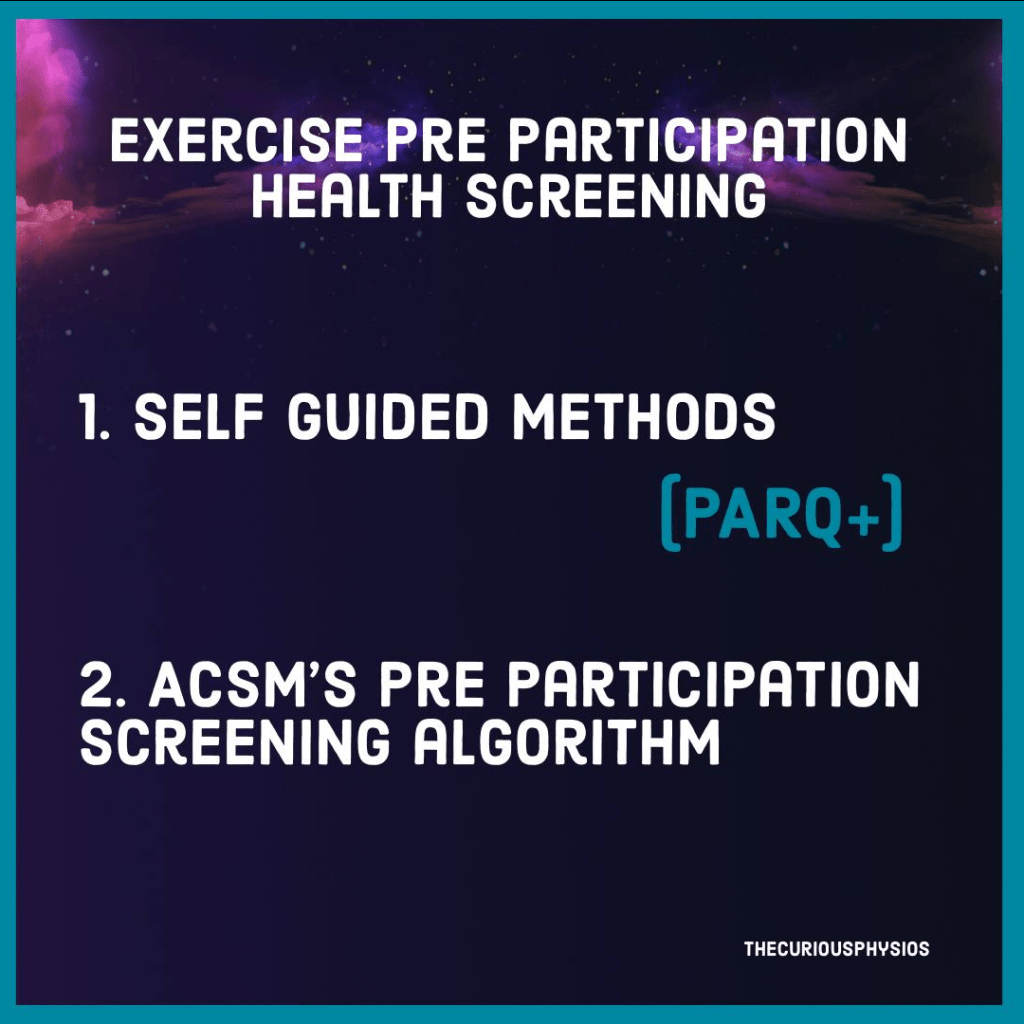
Let us explore the way we do an Exercise Preparticipation Health Screening. The guidelines recommend a two-step procedure:
1. Use of ACSM screening algorithm by a qualified exercise or health care professional (Physiotherapist). In the absence of a health care professional, interested individuals may use self-guided methods.
2. If indicated during screening, medical clearance should be sought from an appropriate health care provider. The clearance must be based on clinical judgement of the provider.
Step I
Self-guided Methods
Preparticipation health screening by a self-screening tool should be done for all individuals wishing to initiate an exercise program. Physical Activity Readiness Questionnaire (PARQ+) is recommended to be used. PARQ+ is freely available and can be easily downloaded in PDF format to use (download link).
Step II
ACSM Algorithm
The algorithm begins by classifying individuals who do or do not currently participate in regular exercise. The second step is to identify individuals with known cardiovascular, metabolic, or renal diseases or those with signs or symptoms suggestive of cardiac, peripheral vascular, or cerebrovascular disease, Types 1 and 2 diabetes mellitus (DM), and renal diseases. During preparticipation health screening, hypertension should be considered a CVD risk factor and not a cardiac disease.
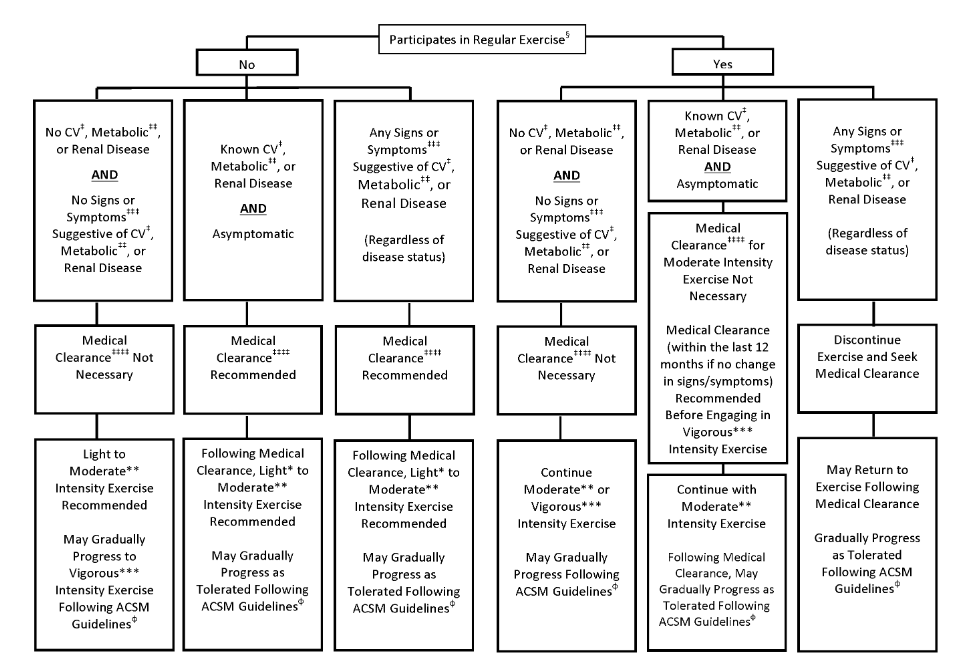
Once we have identified individual’s disease status and current exercise level, we can then categorize the individual into six categories (figure) and the exercise intensity must be prescribed accordingly.
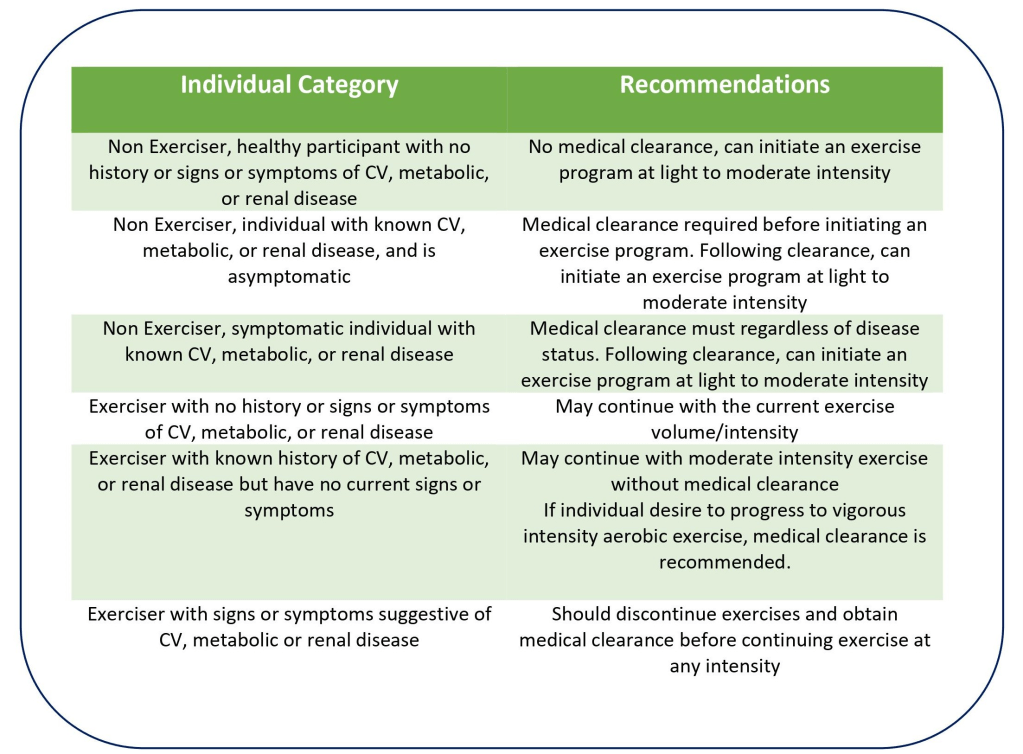
When participants are identified for whom, medical clearance is warranted, they should be referred to an appropriate health care provider. Importantly, the type of medical clearance is left to the discretion and clinical judgment of the provider to whom the participant is referred because there is no single, universally recommended screening test.
I hope this will be helpful in your exercise testing of your clients. Feel free to contact us if you have any queries. Remember this is my interpretation of guidelines. Anyone looking for more details may refer to the ACSM’s guidelines. More importantly, guidelines must be used with clinical reasoning and according to the individual being assessed.
Ammar Suhail PT
References
American College of Sports Medicine. ACSM’s exercise testing and prescription. Lippincott williams & wilkins; 2017 Dec 26.
Riebe D, Franklin BA, Thompson PD, Garber CE, Whitfield GP, Magal M, Pescatello LS. Updating ACSM’s recommendations for exercise preparticipation health screening
 Research in Motion
Leave a comment