This blog post highlights why we started our journey to understand back pain. At our college, we had a difficult time treating people who presented with a complaint of back pain. The knowledge we gained during our training as physiotherapists specializing in musculoskeletal conditions did not help us comprehend the intricacy of back pain.

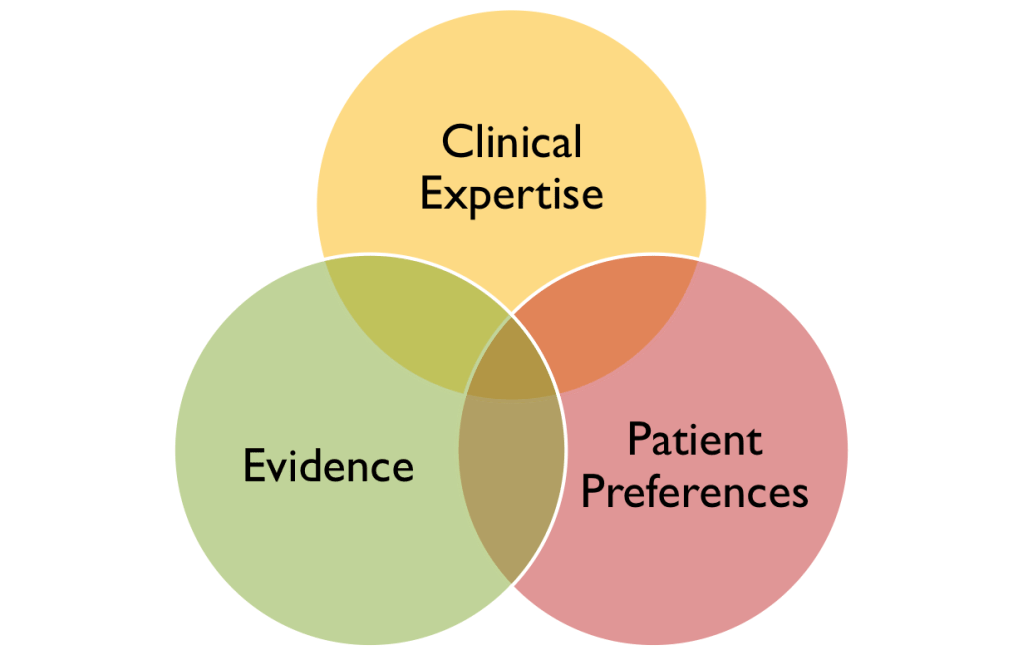
Thankfully enough, one of our professors introduced us to the concept of “Evidence-based Practice (EBP)”. EBP is a clinical practice that is based on applying or translating research findings into our daily patient care practices and clinical decision-making. The EBP further highlights that evidence must be integrated into practice in light of clinical expertise and patient values, preferences, and circumstances. You can read more about EBP through the newsletter at https://evidencebasedphysio.substack.com/.
We decided to read the literature on low back pain (LBP), which made us realize that the problem of LBP is far more complex. However, the reading and discussion with patients made us realize that there is much that can be done in terms of research on back pain in India. Furthermore, we looked not only at research that evaluated treatment efficacy but also explored studies that explored patients & healthcare provider’s beliefs, values, and preferences.
This led us to the conclusion that we needed to embark on this research journey and explore back pain care using different research paradigms.
We initially opted to conduct a few studies on back pain beliefs and perceptions among the general population, practicing physiotherapists (PT), and PT students.
Our first idea was to explore beliefs about back pain in the general population. Owing to the lack of resources and time, we decided to conduct it as separate studies.
First, we only explored beliefs about back pain among college graduates. We analyzed the prevalence of myths about LBP among college-going adults using a cross-sectional survey. The study was published in the BFPT journal, and the findings suggested that various myths of LBP exist in this population group. The other half of the study (general population) is still in progress, and we are collecting data on that (Study II).
We then set out to test the same idea among physiotherapy students. As India is a vast country, we limited our sample to the northern zone of India (Zones of India). We presented this paper at the 2021 Back and Neck Pain Forum, and the study was later published.
Study III: Do undergraduate physiotherapy students believe back pain myths? A cross-sectional survey.
After this study, we felt a need to explore this research question further, and we used a validated questionnaire to explore the beliefs of PT students about LBP in all zones of India (Study IV). The data collection for this study is still in progress, and we hope to complete it soon. We further analyzed the difference between beliefs in the two academic years using an online survey to evaluate whether exposure to back pain has any effect on belief systems in PT students. This study will be out in print shortly (Study V).
The findings from the previously conducted studies made us ponder the reasons why there is a dearth of misinformation regarding back pain. To explore the answer to this question, we first decided to conduct a literature review to look at various possible sources of myths. This resulted in an opinion paper where we summarized the sources of myths about back pain and tried to provide a solution for the dissemination of incorrect information. This study was only possible with the help of David Poulter, who provided valuable insights on the topic.
Study VI: Where do people acquire their beliefs about low back pain?
As one of the sources of erroneous belief was the internet, we decided to analyze various online websites that provide information about back pain. Our findings are published in BFPT, with the significant implication that webpages/websites do not provide authentic information to the masses.
Study VII: Content analysis of the online information available about back pain
Recently, we also tried to understand what physiotherapists in India are researching about back pain. We assessed this, compiled it as a paper, and submitted it to a journal. The study is accepted and published (Study VIII). The study is open access and can be accessed by clicking the link below. The study’s main findings were that included studies showed poor to fair methodological quality according to the PEDro Scale. There has been an increase in the number of RCTs published by Indian physiotherapists. However, there is significant room for improvement in the conduct and reporting of trials.
Study VIII: Quality and quantity of clinical trials on low back pain published by Indian physiotherapists.
In this exploration of back pain, we have been fortunate enough to have the help of our coauthors, specifically David Poulter, who provided help, critique, and contributions to our papers. We are working together on a survey where we are looking at the perceptions of physiotherapists regarding back pain. The survey is live and you can access it through this link: https://forms.office.com/r/C51ZyEFbSz
We look forward to working more towards understanding different aspects of back pain care in the future. Follow the blog for more updates!
Sarah Quais
Ammar Suhail
David Poulter
 Research in Motion
Leave a comment