As I move on from here, I find myself reflecting on my journey as a supervisor.
As a supervisor, I have had the privilege of guiding undergraduate students at the Department of Rehabilitation Sciences at Maldives National University through their very first steps into research. Each batch brought with it new topics, new challenges, and new lessons for all of us. These projects were more than assignments they were stories of curiosity, resilience, and discovery.
Guiding undergraduate research has been one of the most rewarding and humbling aspects of my academic career. It was never just about producing reports or ticking boxes for assessment; it was about walking alongside students as they navigated late nights of writing, moments of self-doubt, and the joy of discovery. Each batch of students I supervised left a mark on me not only through the research they produced, but also through the perseverance, growth, and resilience they showed along the way.
Research is often measured in numbers of publications, citations, and impact factors. But for me, the true meaning of research goes far beyond these metrics. It is about the journey, the questions we dare to ask, the persistence we show in finding answers, and the growth that happens along the way.
Batch 1: Laying the Foundation
My first batch of students will always be special. We spent time debating research questions, reworking survey items, and anxiously checking return rates for questionnaires. There were moments of frustration, data that didn’t make sense at first, edits that seemed never-ending — but also moments of real excitement when the findings started to take shape.
- Shabin studied sports injury prevention among elite athletes, bringing visibility to a growing but under-researched area in the Maldives. There were days when it felt like the data would never come together, but through persistence and creative problem-solving, we managed to complete the study. That struggle itself became a lesson, that research is rarely straightforward, but the effort to reach the right voices makes the findings far more meaningful
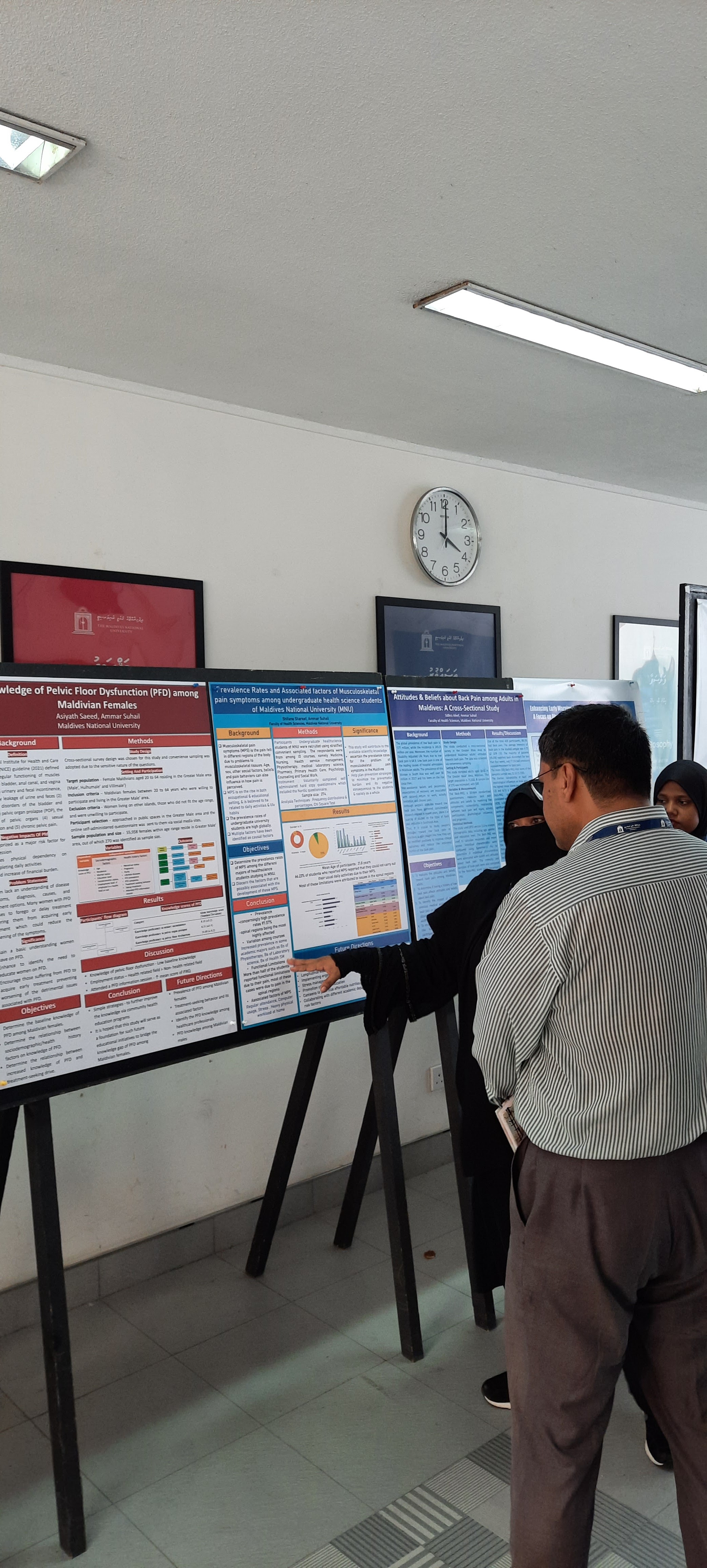
- Asiyath worked on pelvic floor dysfunction among Maldivian females. I still remember the many conversations we had about how to handle such a sensitive topic respectfully while ensuring methodological rigor. She is currently preparing her manuscript.
- Shifana explored musculoskeletal pain among healthcare students. The study is first of it’s kind exploring the pain syndrome among a diverse group of healthcare students. Her determination paid off: the study has now been accepted in the Maldives National Journal of Research (MNJR).
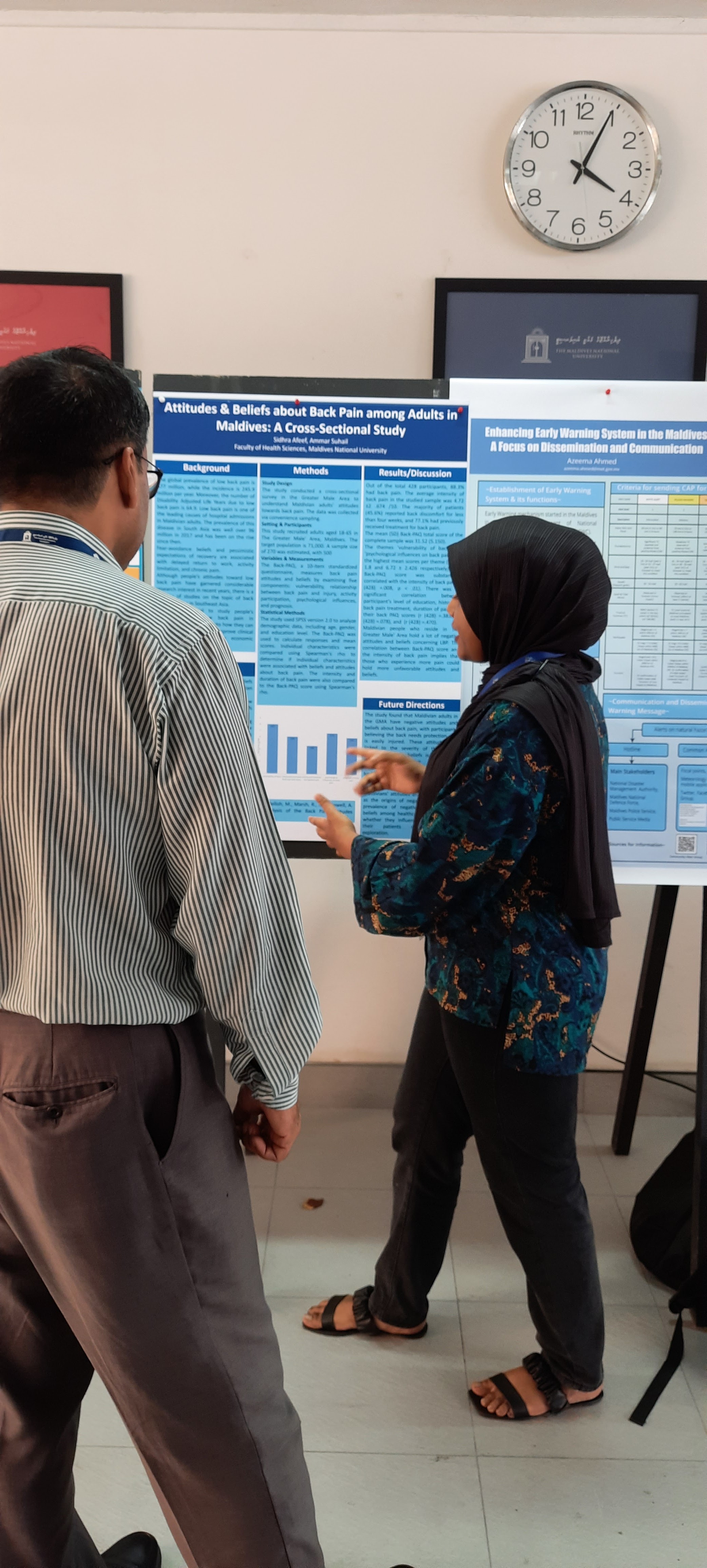
- Sidhura investigated beliefs about back pain among adults, a project shaped by late-night discussions about cultural perceptions and how they influence health-seeking behavior. Her paper is currently being finalized for submission. Her research matched with my idea of building evidence about back pain in Maldives!
✨ This batch showed me the grit it takes to push through the unfamiliar world of research. Their hard work and our countless, red-marked drafts laid the foundation for turning student curiosity into scholarly contribution.
Batch 2: Expanding Horizons
By the second batch, I had learned that supervision wasn’t just about methods, but about encouragement. This group worked through many hurdles from recruitment delays to hours spent in JAMOVI troubleshooting. I can still recall the sighs of relief (and joy) when their first meaningful tables appeared on the screen after weeks of data cleaning.
- Shaheema chose to research stroke awareness — a topic of urgent importance in a country where non-communicable diseases are on the rise. More than just a project, her work became a reminder of how awareness itself can save lives if translated into practice. We are now working to place her paper in a suitable journal, but regardless of the outcome, the journey already reflects her persistence and her deep sense of responsibility towards public health. I hope to see her as a Neurophysiotherapist in future!
- Ismail worked on producing normative values for the 30-second Chair Stand Test — the very first study of its kind in the Maldives. From the outset, we knew it would not be easy. Collecting reliable data across different age groups brought logistical hurdles, long hours, and plenty of learning along the way. His attention to detail was remarkable; every number was double-checked; every protocol followed with care. It was one of the most challenging projects I have supervised, but also one of the most rewarding. The hard work paid off, and today the study has been accepted for publication.
- Isna examined perceptions of physiotherapy among healthcare students. I remember our conversations about interprofessional education and how her project could contribute to broader collaborations. I can still recall the idea we discussed before we decided to do it. She has since seen her work published in the Bulletin of Faculty of Physical Therapy (Springer Open).
- Inmaa developed a patient information leaflet on osteoporosis. Watching her transform a technical subject into a simple, accessible resource for patients was inspiring. Her work is also being prepared for journal submission (one of my favorite studies)
- Rifa worked on assessing knowledge about polycystic ovarian syndrome (PCOS) among MNU graduates. Her project stood out because of her strong commitment to women’s health, a focus that guided every stage of her research. I remember how carefully she shaped her questions, always mindful of the sensitivity of the topic. She wanted the study to not just collect data, but to open up conversations that are often avoided. Her persistence paid off and the work is now published in the Maldives National Journal of Research (MNJR), adding much-needed evidence to an underexplored area in the Maldivian context.
✨ What made this batch memorable was their sheer persistence. There were late nights discussions, entire weekends spent refining report, and moments when students felt ready to give up. Yet, every challenge became a lesson in perseverance.
Batch 3: Diversifying Perspectives
By the time I supervised the third batch, I had a deeper understanding of the healthcare setup in the Maldives. This insight allowed me to guide students with greater clarity helping them choose topics that were not only academically sound but also directly relevant to the realities of our healthcare system. I found myself drawing connections between their projects and the broader gaps in practice, and I could anticipate challenges they might face during data collection. This made our discussions more grounded, our methods more refined, and the supervision process more purposeful.
- Shaneen carried out a qualitative study on understanding back pain from the perspectives of patients. Through her interviews, she uncovered the lived realities of Maldivians managing pain outside the clinic — the cultural beliefs, home remedies, and personal struggles that statistics alone could never capture. What I enjoyed most was our long discussions that often stretched beyond the research itself. We talked not only about her findings, but also about the bigger picture how research in the Maldives could move forward, what questions still needed to be asked, and how young physiotherapists like her could shape that future. Those conversations reminded me that supervision is not only about guiding a single project, but also about nurturing a mindset that sees research as an ongoing journey of discovery and contribution!
- Arushy explored knowledge exercise practices during pregnancy among women of reproductive age. She juggled her study with clinical rotations, and data collection. What made her journey remarkable was the way she balanced it all: clinical rotations during the day and data collection in the evenings.
- Mirufa surveyed physiotherapist about management of low back pain. I watched her struggle through the long process of not getting responses, but she never lost patience.
- Saifa studied runners’ beliefs about injury risk factors. Her project was a reminder that physiotherapy research can connect with community interests like recreational sports.
All four have submitted their manuscripts to journals, a testament to their dedication.
✨ This batch taught me that supervision is as much about empathy as it is about academic guidance. I saw them wrestle with deadlines, manage self-doubt, and yet push through. Their submissions were not just a result of hard work, but of countless hours of resilience, group discussions, and an unwavering belief that their voices matter in research.
Reflections on the Journey
Looking back, these batches represent more than research reports. They represent courage students daring to ask questions that matter. They represent persistence facing setbacks with ethics approvals, data collection, or revisions, yet moving forward. And most of all, they represent possibility……….the possibility that undergraduate projects, if nurtured, can grow into published evidence that influences physiotherapy knowledge and practice.
For me as a supervisor, the experience has been deeply personal. I remember the countless editing’s, the late-night working & fear of getting locked in the department, the difficult conversations when motivation dipped, and the joy of acceptance emails. These moments reminded me that research is not just about producing outcomes, but about cultivating researchers.
As I continue my own research journey, I carry these stories with me. They are the invisible side of research — the lessons, the emotions, and the growth that live beyond publications.
It always seems impossible until it is done.”
—Nelson Mandela
Thank You!

 Research in Motion
Leave a comment